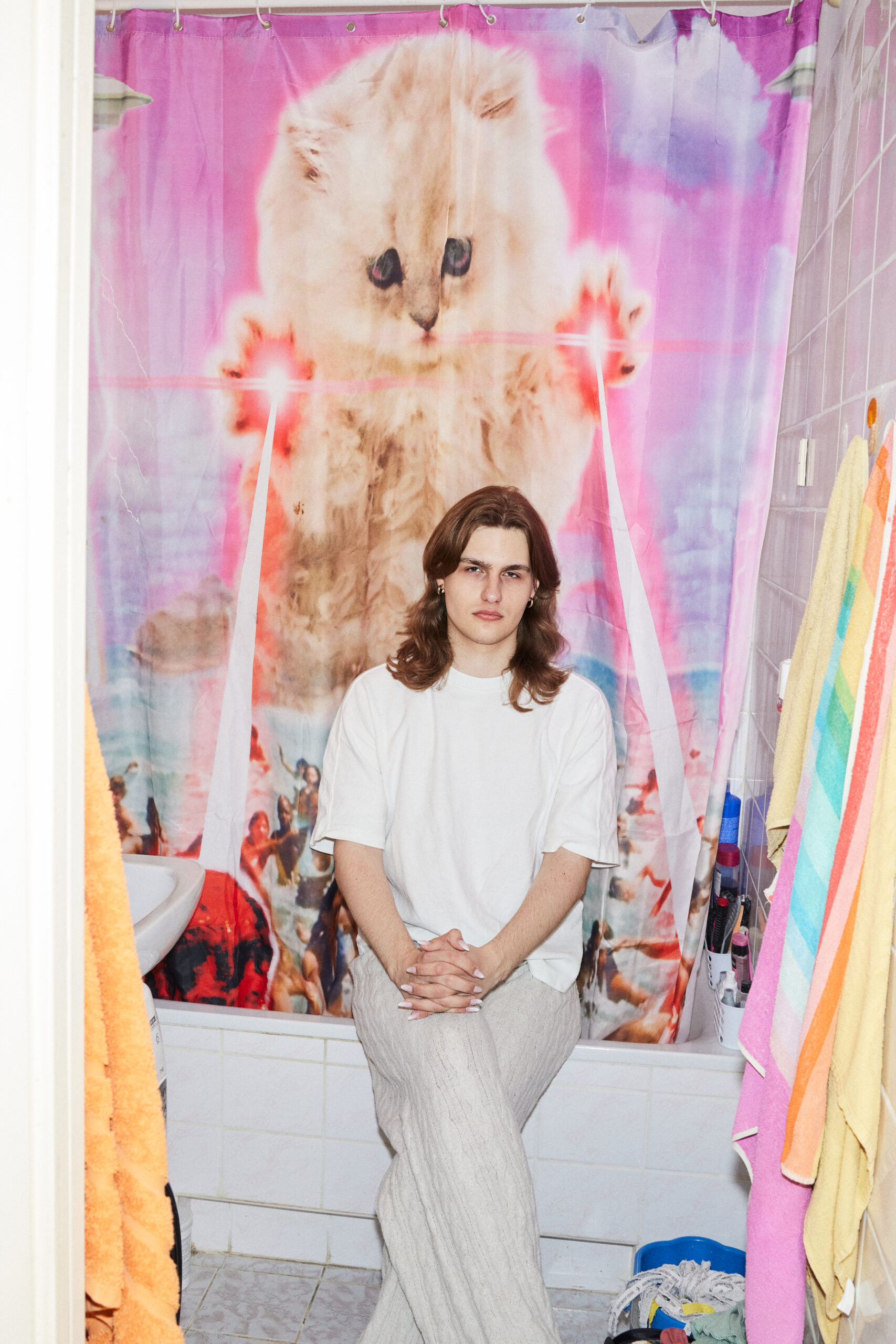
Beauty has nothing to do with standards set by others
Text: Irène Schäppi
Photo: Zhao Lanxin
Conversation
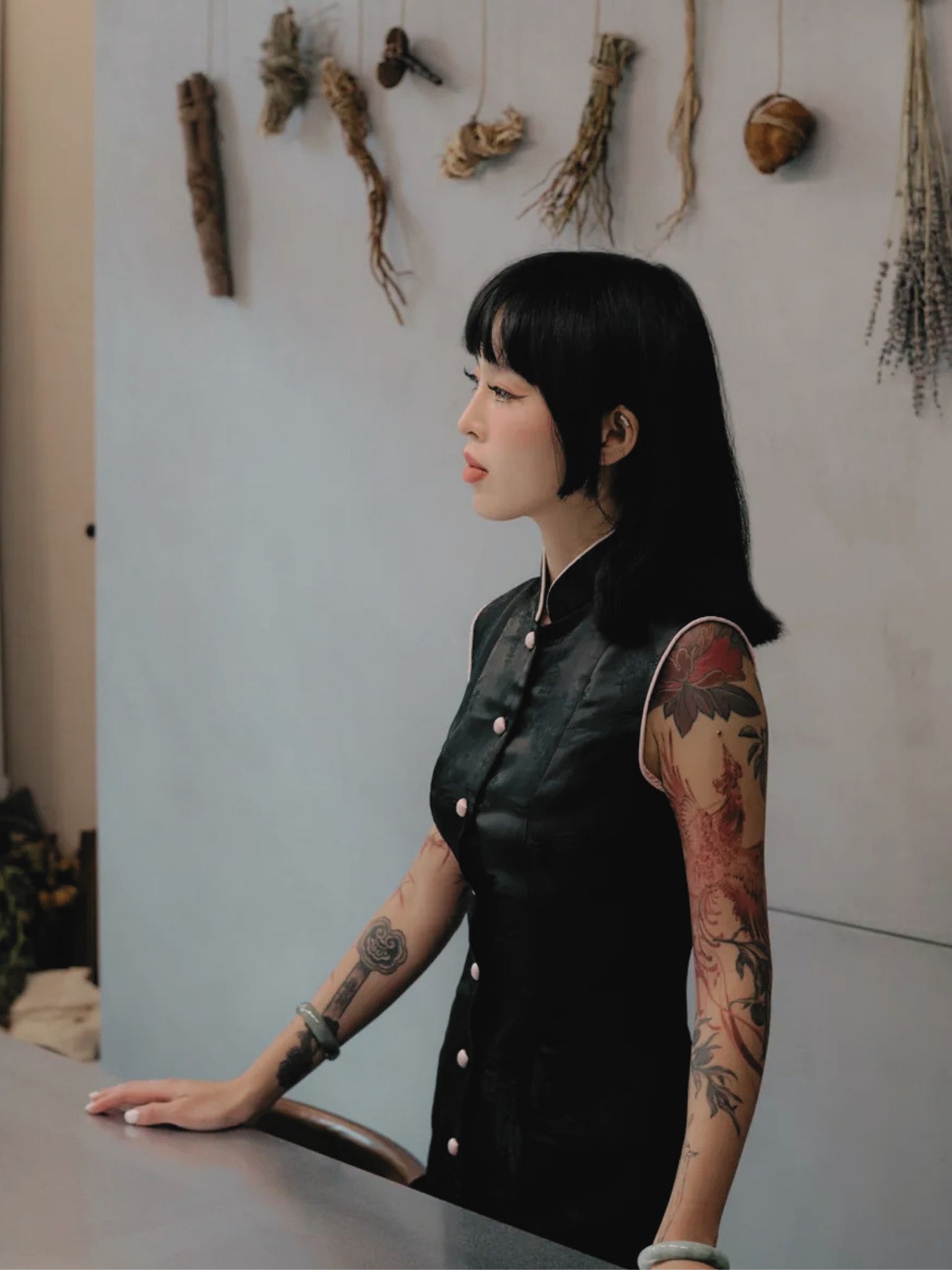
Pale skin, big eyes, under 100 pounds. These are the beauty standards Zoey Xinyi Gong grew up with in Shanghai, which she calls toxic. She left for New York alone at sixteen, trained as a dietitian, and returned in 2024. Today she works as a Chinese medicine food therapist and runs wellness tours, living between China and France.
Irène
How has your view of beauty changed over the course of your life?
Zoey
Like everyone, I thought beauty was just physical. Growing up in China, I saw beauty standards as toxic: pale skin, big eyes, under 100 pounds. But now I see beauty as being your original self: passionate, unique, comfortable with your natural features. Beauty has nothing to do with standards set by others.
Irène
When does beauty become work for you, and how do you negotiate that demand with yourself?
Zoey
I don’t feel pressure to be beautiful. I realise I don’t really think about “how can I become more beautiful?”
Irène
Which beauty or optimisation habit do you question critically today, and what led you to that point?
Zoey
I moved to China in 2024, and I absolutely hate the beauty standards here. There are so many invisible eating disorders and unhealthy practices because of them. Almost everyone is trying to lose a lot of weight. Many young girls choose plastic surgery or make-up that doesn’t suit their skin tone to achieve the “European” look. But for me, the problem is not that they are doing these things, or the tools they use. The problem is why they are doing it: the unhealthy yet incredibly celebrated beauty standards on social media, and pressure from men.
For Zoey Xinyi Gong, beauty begins where other people’s standards end.
Irène
What does it stir in you when you see people visibly ageing?
Zoey
I’m not sure it stirs anything. I think ageing is natural and we should accept it more. It stirs me more when I see someone who looks visibly younger than they should and has visibly had a lot of work done. That I find a bit unnatural.
Irène
Tell me about a moment when you changed something externally and what actually shifted internally.
Zoey
I had Botox on my forehead for the first time when I visited Thailand. It was an “oh, let me try it, why not, it’s everywhere” moment. I felt excited and curious beforehand. But afterwards, my forehead was so stiff, and I hated that unnatural feeling. I think it changed my expression too. Ironically, I was glad I had a fringe, so nobody could see my now very wrinkle-free but way-too-smooth Botox forehead.
Irène
How do social media, selfies and filters affect your self-image?
Zoey
I think my self-image is pretty set now, so these things don’t affect me in a meaningful way. But when social media shows me images of “perfect” bodies, “perfect” skin, and “perfect” features I don’t have, it does grab my attention.
Irène
What role do visibility and social relevance play in your relationship with beauty?
Zoey
I often put on make-up just for my videos. I’m happy to wear make-up and feel put together. But I notice that videos where I look “hot” in the conventional sense, with more make-up and dressed up, get me a lot more views. Overall, it doesn’t really affect my day-to-day life. I don’t change myself for content, and I think my audience appreciates that. What I hear a lot from people I meet on the street is that I look the same as I do online.
Irène
What is your earliest beauty memory?
Zoey
My mother putting on her lipstick.
This interview is part of the Super Flattering Index, an ongoing exploration of beauty today.
Elay Neal Moses spent his teenage years wishing he were taller, stronger, cooler. Today the photographer and director says beauty is confidence, ageing is